
Let’s talk about something that’s probably more common than you think—sleep apnea. Imagine this: you wake up every morning feeling like you’ve barely slept.
Your partner’s been nudging you all night because of your loud snoring, and you’re dragging yourself through the day, barely able to keep your eyes open.
Sound familiar? If so, you’re not alone.
Here’s the thing: a lot of people don’t even know they have sleep apnea, but they’re living with the fallout.
We’re talking about serious stuff, like struggling to stay awake at work, snapping at loved ones because you’re just so tired, and, worse yet, risking your health.
It’s easy to brush off snoring as just an annoyance, but it could be a sign of something more serious, something that needs attention. Let’s talk about this!
What is Sleep Apnea?
Have you ever wondered why you wake up feeling exhausted, even after what should have been a full night’s sleep?
You’re not alone. Many people chalk it up to stress or just a bad night, but there could be something more going on, something called sleep apnea.
This is a condition where your breathing actually stops and starts while you sleep. Sounds scary, right? It is. But what’s even more concerning is that most people don’t even know it’s happening.
You might think of snoring as just a nuisance, but in reality, it could be a sign that your airway is getting blocked during the night.
When this happens, your body has to work overtime to get you breathing again, disrupting your sleep cycle and leaving you feeling wiped out by morning.

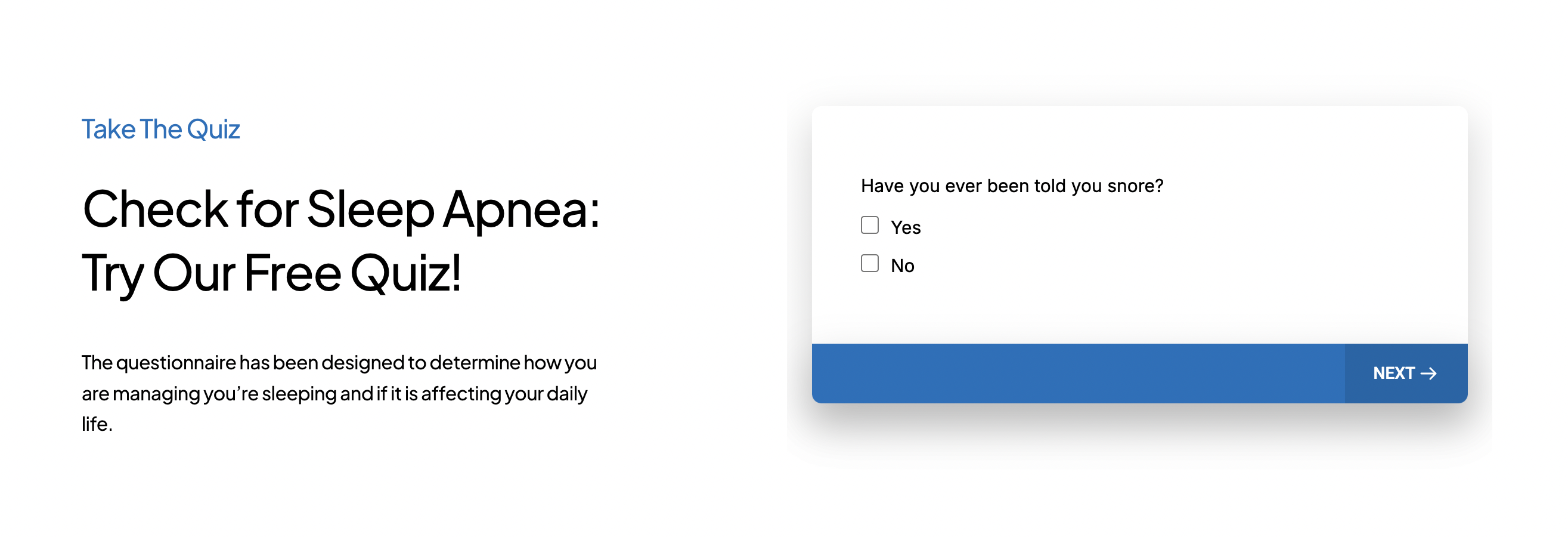
Curious if You’re at Risk? Take Our Quiz and find out!
Types of Sleep Apnea
Sleep apnea isn’t a one-size-fits-all condition. There are different types, each with its own set of challenges. Understanding the type of sleep apnea you’re dealing with can make a big difference in how it’s treated. Here’s a quick rundown of the three main types for adults and for pediatric sleep apnea:
- Obstructive Sleep Apnea (OSA):
This is the most common type. It happens when the muscles in the back of your throat relax too much, causing a blockage in your airway. This blockage stops you from breathing properly, leading to snoring and frequent awakenings throughout the night. - Central Sleep Apnea (CSA):
This type is a bit different. With CSA, your brain doesn’t send the right signals to the muscles that control your breathing. As a result, your body doesn’t even try to breathe for brief periods. It’s less common than OSA but still serious. - Complex Sleep Apnea Syndrome:
Also known as treatment-emergent central sleep apnea, this type is a combination of both obstructive and central sleep apnea. It often starts as obstructive sleep apnea but becomes more complex when central sleep apnea develops during treatment, typically with CPAP therapy.
Each type requires a different approach to treatment, so getting the right diagnosis is crucial. Understanding which type you might have is the first step in taking control of your sleep and, ultimately, your health.
Sleep Disorder Treatments from Your Dentist
So, you’ve learned about sleep apnea, and realized it might be affecting your life. The good news is that there are effective treatments available that can help you get back to feeling like yourself again. At TLC Dental Care, Dr. Terrie Cribbs offers a range of treatments tailored to your specific needs, ensuring you get the relief you deserve.
- Oral Appliance Therapy:
A custom-fitted device that repositions your jaw to keep your airway open while you sleep. It’s a comfortable, non-invasive solution. - Lifestyle Modifications:
Simple changes like losing weight, quitting smoking, or adjusting your sleep position can reduce sleep apnea symptoms and improve your overall health. - Continuous Positive Airway Pressure (CPAP):
A machine that provides constant air pressure through a mask, keeping your airway open. It’s highly effective for more severe cases. - Surgery:
In some cases, surgery may be needed to correct structural issues causing your sleep apnea. This is typically considered when other treatments aren’t effective. - Combination Therapy:
A personalized plan that might include a mix of treatments, ensuring you get the best possible results.
Finding the right treatment is crucial to improving your quality of life. At TLC Dental Care, Dr. Terrie Cribbs is dedicated to helping you find the solution that works best for you, so you can wake up feeling refreshed and ready to take on the day.

Why a Dentist?
You might be wondering, “Why should I see a dentist for my sleep apnea?” It’s a great question, and the answer lies in the unique expertise that dentists like Dr. Terrie Cribbs bring to the table.
Dentists are trained to understand the complex relationship between your oral health and your airway. They spend their days focusing on your mouth, jaw, and related structures, and areas directly involved. This makes them uniquely qualified to diagnose and treat conditions that affect your breathing during sleep.
At TLC Dental Care, Dr. Cribbs can offer solutions like custom-fitted oral appliances that keep your airway open while you sleep. Unlike general practitioners, who might focus on the symptoms, a dentist can address the root cause of your sleep apnea by assessing your bite, jaw position, and overall oral health.
Choosing a dentist like Dr. Cribbs means you’re getting specialized care that’s tailored to your needs. She’ll work closely with you to develop a treatment plan that doesn’t just manage your symptoms but targets the underlying issues, helping you achieve lasting relief and better sleep.
Your Path to Restful Nights Starts Here
At TLC Dental Care, we know how life-changing a good night’s sleep can be. If sleep apnea has been holding you back, it’s time to address the root cause and reclaim your energy. Dr. Terrie Cribbs specializes in tailored treatments that go beyond just managing symptoms—they offer real solutions.
We believe that everyone deserves to wake up feeling refreshed and ready to take on the day. Don’t let sleep apnea continue to affect your life, your health, and your relationships. With a free consultation, Dr. Cribbs can assess your needs and guide you toward the best treatment options.
Take the first step toward better sleep and a brighter tomorrow. Schedule your free consultation with Dr. Terrie Cribbs at TLC Dental Care today, and start your journey toward restful nights and a healthier life.
Learn More
If you want to learn more about the signs of sleep apnea, check out our blog! We also cover topics like the different types of sleep apnea treatments, how to stop snoring, adult sleep apnea, pediatric sleep apnea and much more!